
My Cart



Grandstream HT801 V2 1-port FXS VoIP adapter
Internal ref: GRAHT801V2 // Manufacturer part #: HT801 V2
Compact ATA adapter for connecting an analogue telephone to a VoIP network, featuring 1 FXS port, TLS/SRTP security and automatic provisioning.
NEW
£36.99
£44.39 Incl. VAT
2 years of manufacturer warranty Subject to manufacturer conditions
Pay in 3 interest-free payments of Show more

Key features
- VoIP ATA adaptor for using an analogue telephone on an IP telephone network
- Connectivity: 1 FXS port and 1 10/100 Mbps RJ45 Ethernet port
- Supports 1 SIP profile and 3-way conference calls
- Audio quality: G.711, G.722, G.729 and Opus codecs, with echo cancellation
- TLS and SRTP protocols to secure signalling and voice communications
- Simplified management: automatic provisioning via TR-069 and XML files
- Advanced features: call transfer and call forwarding, call waiting and SIP server failover
In the box
- 1 X Grandstream HT801 V2
Product range:
Product description
Grandstream HT801 V2: VoIP telephony for analogue devices
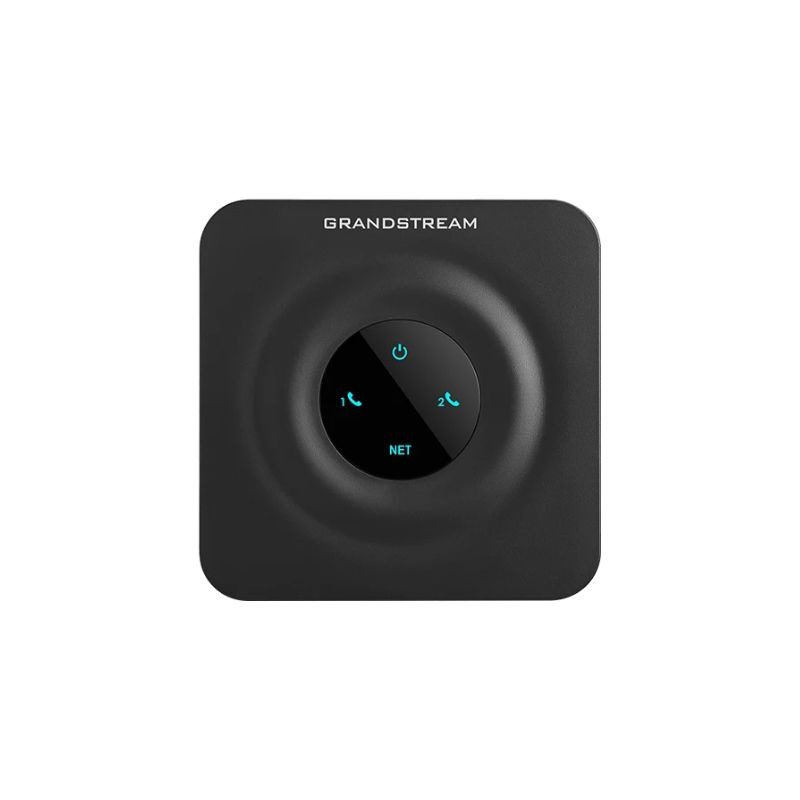
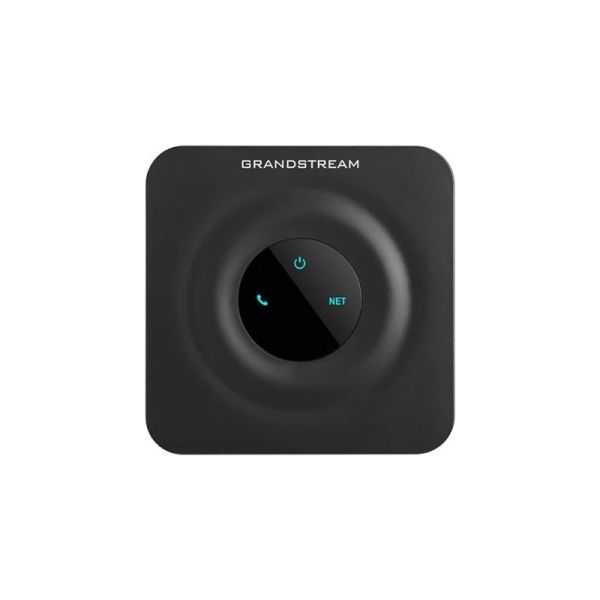
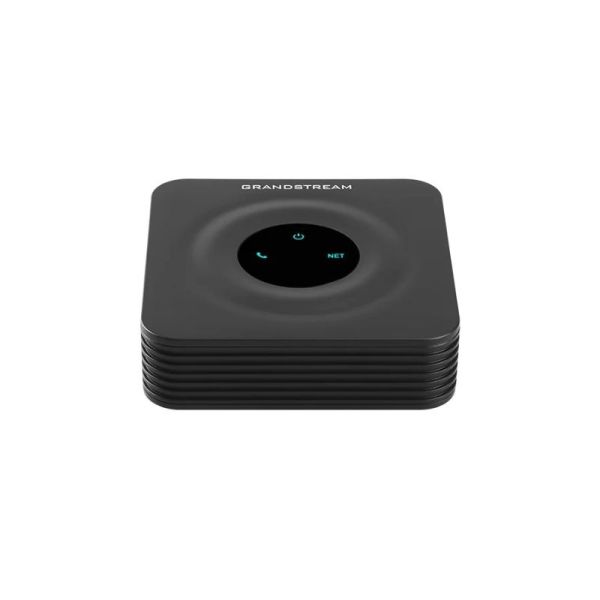
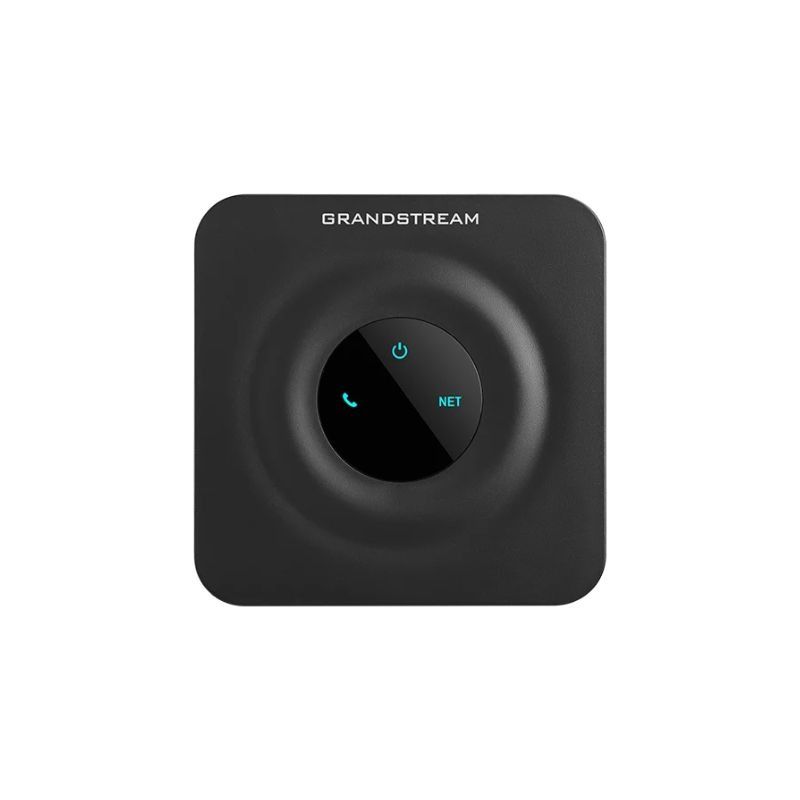
The Grandstream HT801 V2 is an analogue telephone adapter (ATA) that allows you to connect a traditional telephone to an IP telephony system. Compact and easy to integrate, it offers a practical solution for retaining existing analogue devices whilst utilising the features of VoIP communication.
A simple connection between analogue telephony and VoIP
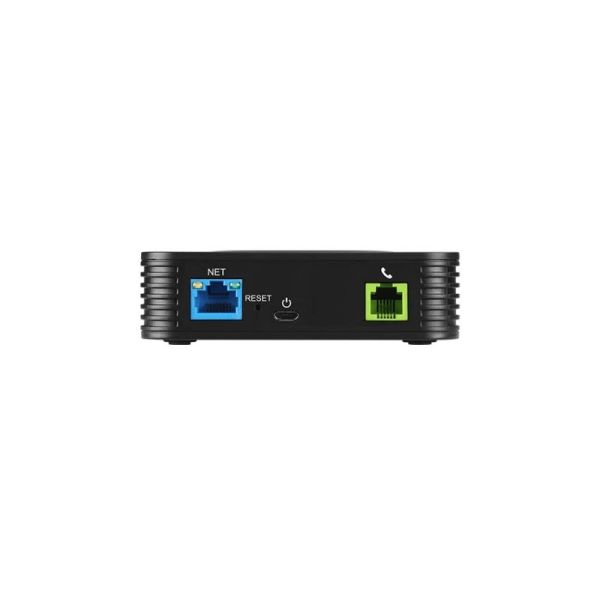
Equipped with 1 FXS port for the telephone connection and 1 10/100 Mbps RJ45 Ethernet port for the network, the HT801 V2 supports a SIP profile. It allows you to make and receive calls via a compatible VoIP service, without necessarily having to replace your existing analogue telephone.
Measuring just 100 x 100 x 29.5 mm, it can be easily installed on a desk or in a technical room.
Audio quality and advanced telephone functions
Support for the G.711, G.722, G.729A/B, G.726-32, iLBC and Opus codecs offers flexibility in managing voice communications. The dynamic jitter buffer and advanced echo cancellation help to maintain stable audio transmission.
The device incorporates features such as call transfer, call forwarding, call waiting, Do Not Disturb mode and 3-way conferencing. It also supports fax over IP via the T.38 protocol, with automatic switching to G.711 for fax transmission in pass-through mode.
Communications security and service continuity
To secure communications, the HT801 V2 supports TLS for SIP signalling and SRTP for audio streams. HTTPS and SSH are also available for management operations.
The SIP server failover function enables automatic switching to a secondary server when the primary server is no longer reachable, helping to ensure continuity of telephone service.
Automatic provisioning and centralised management
The HT801 V2 simplifies configuration and maintenance thanks to automatic provisioning via TR-069 and XML configuration files. It also supports remote management via a web interface, SSH and syslog.
With compatible Grandstream UCM series IP PBXs, the Zero Config feature simplifies device deployment, making it useful for businesses and VoIP service providers managing multiple installations.
Professional applications and compatibility
The Grandstream HT801 V2 is suitable for small offices, individual workstations, commercial premises and installations managed by VoIP service providers. It allows an analogue telephone to be integrated into a SIP infrastructure and provides a solution for a gradual migration from traditional telephony to IP telephony.
It can be used with compatible SIP services and IP PBX systems. The availability of features depends on the VoIP provider and the network configuration.
Technical specifications:
| Feature | Value |
|---|---|
| Device type | Analogue telephone adapter (ATA) |
| Telephone port | 1 FXS |
| Network port | 1 Ethernet RJ45 10/100 Mbps |
| SIP profiles | 1 |
| Signalling protocol | SIP (RFC 3261) |
| Audio codecs | G.711, G.722, G.723.1, G.729A/B, G.726-32, iLBC, Opus |
| Audio processing | Advanced echo cancellation and dynamic jitter buffering |
| Audio conferencing | 3 participants |
| Call functions | Transfer, forward, call waiting, hold, Do Not Disturb |
| Fax over IP | T.38 Group 3 up to 14.4 kbps |
| Fax pass-through | G.711 |
| Caller ID | Bellcore Type 1 and 2, ETSI, BT, NTT, DTMF |
| Dialling methods | DTMF, pulse |
| DTMF transmission | In-band, RFC 2833, SIP INFO |
| Audio protection | SRTP |
| Signalling security | TLS, SIPS |
| Secure management | HTTPS, SSH |
| Provisioning | HTTP, HTTPS, TFTP, TR-069 |
| Provisioning encryption | AES |
| Automatic configuration | Zero Config with compatible Grandstream UCM PBXs |
| SIP redundancy | Automatic SIP server failover |
| Quality of Service (QoS) | 802.1Q VLAN, 802.1p, ToS, DiffServ, MPLS |
| Remote management | Web interface, SSH, syslog |
| LED indicators | Power, network, telephone |
| Reset button | Yes |
| Ring capacity | 5 REN |
| Analogue line range | Up to 1 km with 24 AWG cable |
| Input power | 100–240 V AC, 50/60 Hz |
| Required output power | 5 V DC, 1 A |
| Operating temperature | 0 to 40 °C |
| Storage temperature | From -10 to 60 °C |
| Relative humidity | 10–90 per cent, non-condensing |
| Dimensions | 100 x 100 x 29.5 mm |
| Weight | 102 g |
| Compliance | FCC, CE, RCM |
Files
Grandstream HT801 V2 - Datasheet
Product Specs.
| Manufacturer part # | HT801 V2 |
|---|---|
| EAN | 6947273705383 |
| Warranty | 2 years |
| Type of networking product | Gateway |
| Managed | Managed |
| Rackable | Not rackable |
| Power Over Ethernet (PoE) | Without PoE |
Frequently Asked Questions
Currently there are no questions for this product.