
My Cart



Indoor Displays
High-quality visuals for indoor environments
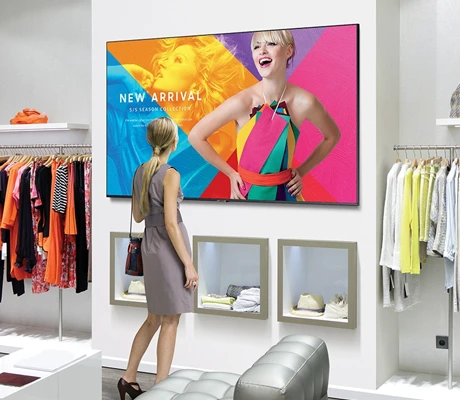
Indoor LED displays are designed for 24/7 operation and deliver brilliant, uniform images even in bright indoor environments. Ideal for reception areas, showrooms, foyers and retail spaces, they showcase brand messages, information and promotions with maximum impact. Indoor LED displays offer a durable, scalable solution for professional visual communication.
- World Cup SpecialFrom 14th April to 29th May 2026
Get 10% off TV stands when you buy a TV with a tuner using the code SUP10
Samsung BE55FX-H Business TV 55'' UK
IN STOCK55" professional 4K UHD display dedicated to professional 16/7 display, with Tizen Smart TV, Samsung VXT cloud management and 3-sided borderless design.- For digital signage: 16/7 operation
- 55" 4K UHD display: sharp and impactful image quality
- Samsung Business TV for broadcasting TV content and promotional messages
- Tizen™ Smart TV operating system: smooth, secure, and easy to manage
- 3-sided bezel-less design: elegant integration
- Samsung VXT compatible: centralized remote content management
£1,050.99£593.99 £712.79 Incl. VATRef: SABE55FXHUKCompare 
iiyama ProLite LH5560UHS-B2AG
IN STOCKProfessional 55″ screen with 4K UHD resolution, anti-reflective treatment and Android 11, designed for digital signage and signage.- Usage: indoor digital signage
- Android 11: display without an external PC
- 55'' 4K UHD screen (3840 x 2160)
- Orientation: portrait or landscape
- Brightness 500cd/m²: ideal in bright spaces
- Continuous operation 24/7
- iiSignage²: remote content management
- VESA mounting: 300x400mm
£669.00£648.99 £778.79 Incl. VATRef: IIYLH5560UHSB2ACompare
Samsung E-Paper EMDX32
IN STOCK32‘’ screen that redefines energy-efficient digital signage with full-colour e-paper technology.- 32‘’ professional colour digital signage display
- Ultra low power consumption, light and slim
- High visibility and functionality
- Digital ink technology
- 5000 mAh rechargeable battery
- 2 USB-C ports (for charging and data transfer)
- Wi-Fi and Bluetooth support for enhanced connectivity
- 24/7 continuous exchange of still images
£1,249.00 £1,498.80 Incl. VATRef: SAEPAPER32UKCompare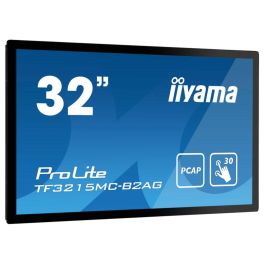
iiyama ProLite TF3215MC-B2AG Monitor
IN STOCKExperience stunning visuals and responsive touch interaction.- Impressive Display Size: Enjoy a spacious 31.5" screen for optimal viewing.
- Full HD Resolution: Crystal clear 1920 x 1080 pixels for vivid graphics.
- Robust Touch Technology: Multi-touch functionality enhances interactivity.
- IP65 Rating: Dust and water resistant, ideal for public installations.
- Flexible Orientation: Easily switch between landscape and portrait modes.
£854.69£658.99 £790.79 Incl. VATRef: IIYTF3215MB2GCompare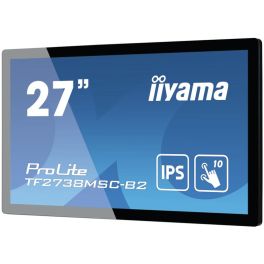
iiyama ProLite TF2738MSC-B2
IN STOCKExperience seamless interaction with the iiyama ProLite TF2738MSC-B2.- Vibrant Full HD Display delivers crystal-clear visuals at 1920 x 1080 pixels.
- Multi-Touch Capability supports simultaneous touch from multiple users, enhancing collaboration.
- Durable Design with rugged bezel and edge-to-edge glass for increased protection and usability.
- Wide Viewing Angles at 178° ensure everyone can see the screen clearly, no matter the position.
- Multiple Connectivity Options including DVI, HDMI, and DisplayPort for versatile integrations.
£549.92£475.99 £571.19 Incl. VATRef: IIYTF2738MSCCompare
Samsung QH115F 115 Zoll 4K Signage Display
IN STOCK115-inch 4K display for digital signage, featuring a large screen, high brightness and reliable 24/7 operation for professional environments.- 115-inch screen diagonal for maximum visibility in large spaces
- 4K UHD resolution for detailed and clear content
- Professional signage display for commercial applications
- 24/7 continuous operation for continuous use in business
- High brightness for good readability even in bright environments
- Wide range of connection options for flexible integration
£15,999.99£14,263.99 £17,116.79 Incl. VATRef: SALH115QHFEBGXENCompare
iiyama ProLite T2238MSC-B1 Monitor
IN STOCKElevate your display experience with touch technology.- Touchscreen Capability: Interact easily with 10-point touch technology.
- Full HD Resolution: Enjoy sharp images with 1920 x 1080 pixels.
- Robust Design: Built with scratch-resistant glass and metal housing.
- Versatile Orientation: Use in landscape, portrait, or face-up modes.
- IPX1 Rated: Protected against dripping water, ideal for commercial use.
£433.39£393.99 £472.79 Incl. VATRef: IIYT2238MSCB1Compare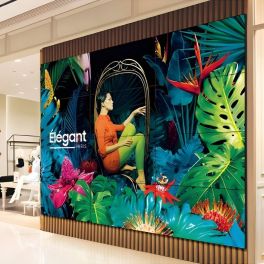
SAMSUNG VM46BU Videowall
IN STOCKVideo wall display with ultra-narrow bezel, Full HD resolution and 24/7 operation – ideal for professional applications!- 46-inch display with ultra-narrow bezel
- Full HD resolution (1920 x 1080 pixels)
- LED backlighting for clear images
- Brightness of 500 cd/m² for bright environments
- 24/7 operating time for continuous use
- Compatible with Samsung Smart Signage Platform
- Easy installation for video wall configurations
- Sleek black design
£1,320.99 £1,585.19 Incl. VATRef: SAVM46BUCompare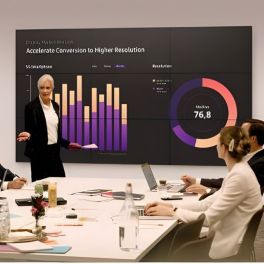
SAMSUNG VM55BU Videowall
IN STOCKVideo wall display with ultra-narrow bezel, Full HD resolution and 24/7 operation – ideal for professional applications!- 55-inch display with ultra-narrow bezel
- Full HD resolution (1920 x 1080 pixels)
- LED backlighting for clear images
- Brightness of 500 cd/m² for bright environments
- 24/7 operating time for continuous use
- Compatible with Samsung Smart Signage Platform
- Easy installation for video wall configurations
- Sleek black design
£1,787.99 £2,145.59 Incl. VATRef: SAVM55BUCompare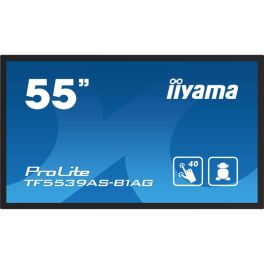
iiyama ProLite TF5539AS-B1AG
IN STOCK55'' all-in-one touchscreen with Android, perfect for kiosks, shops, or meeting rooms.- For kiosks, meeting rooms, shops, and more...
- 55'' 4K UHD screen
- Touchscreen with up to 40 touch points
- Built-in Android 11 system
- IP65 (front panel): water and dust resistant
- Compatible with display windows thanks to through-glass touch
- FailOver function: content always active
- Open Frame design: customised integration
£1,979.00£1,920.99 £2,305.19 Incl. VATRef: IIYTF5539ASB1AGCompare- World Cup SpecialFrom 14th April to 29th May 2026
Get 10% off TV stands when you buy a TV with a tuner using the code SUP10
Samsung BE65FX-H Business TV 65'' UK
IN STOCK65-inch 4K UHD professional display designed for professional display, with Tizen Smart TV, Samsung VXT cloud management and 3-sided borderless design.- For digital signage: 16/7 operation
- 65" 4K UHD display: clear and eye-catching visuals
- Samsung Business TV for broadcasting TV content and promotional messages
- Tizen™ Smart TV operating system: smooth, secure, and easy to manage
- Integrated audio: 20 W stereo speakers
- 3-sided bezel-less design: elegant integration
- Samsung VXT compatible: centralized remote content management
£1,072.00£760.99 £913.19 Incl. VATRef: SABE65FXHUKCompare 
Samsung OM55N-DS Window-Facing Display
IN STOCK55-inch shop window display with Full HD resolution, Tizen 5.0 and Wi-Fi for enhanced visibility.- 3000 cd/m² screen brightness
- Full HD resolution (1920 x 1080)
- Tizen 5.0 operating system
- Optimised for shop window applications
- High-efficiency LCD technology
- Built-in Wi-Fi for easy connectivity
- Energy-efficient operation
- Slim design in black
£4,899.99£4,014.99 £4,817.99 Incl. VATRef: SAOM55NDSCompare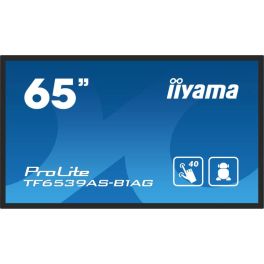
iiyama ProLite TF6539AS-B1AG
IN STOCK65'' all-in-one touchscreen with Android, perfect for kiosks, shops, or meeting rooms.- For kiosks, meeting rooms, shops, and more...
- 65'' 4K UHD screen
- Touchscreen with up to 40 touch points
- Built-in Android 11 system
- IP65 (front panel): water and dust resistant
- Compatible with display windows thanks to through-glass touch
- FailOver function: content always active
- Open Frame design: customised integration
£2,799.00£2,715.99 £3,259.19 Incl. VATRef: IIYTF6539ASCompare
iiyama ProLite LH5064UHS-B1AG
IN STOCK50" professional display with 4K UHD resolution, Android 14 and 24/7 dynamic display, designed to offer continuous reliability and centralised control for corporate environments.- Usage: indoor digital signage
- Built-in Android 14
- 50" 4K Ultra HD screen: maximum readability
- Landscape or portrait orientation
- FailOver technology: uninterrupted display
- 24/7 design: continuous use
- Simple and efficient remote content management
- Multiple connectivity: HDMI, DisplayPort, USB, network
- VESA mounting: 400x300mm
£629.00£610.99 £733.19 Incl. VATRef: IIYLH5064UHSCompare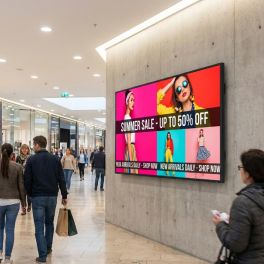
iiyama ProLite LH4365UHSB-B1
IN STOCK43" 4K UHD screen with Android 11, high brightness and 24/7 display, ideal for digital signage in businesses, shops and public spaces.- Usage: indoor digital signage
- Integrated Android 11 system
- 43" 4K UHD surface: sharp, detailed display
- 800 cd/m² brightness: suitable for bright environments
- Orientation: portrait or landscape
- iiSignage²: remote content updates
- FailOver function for display continuity
- Full connectivity: HDMI, DisplayPort, USB, RJ45, Wi-Fi
- 24/7 continuous operation
£619.00£520.99 £625.19 Incl. VATRef: IIYLH4365UHSCompare
Philips 32BDL3650Q
IN STOCKProfessional 32-inch digital signage display with Full HD resolution, Android 10, and reliable 18/7 operation for impactful business communications.- Full HD Display (1920 x 1080): Crystal-clear image quality with 350 cd/m² brightness for vivid content
- Android 10 OS: Built-in processor with 3GB RAM and 16GB storage for smooth content management
- 18/7 Operation: Reliable performance for extended daily use in commercial environments
- Flexible Connectivity: Multiple ports including HDMI, USB, and Wi-Fi for versatile content delivery
- FailOver Protection: Automatic backup content playback ensures continuous operation
- Remote Management: Cloud-based control with Wave platform for efficient multi-display administration
- Dual Orientation: Supports both landscape and portrait modes for flexible installation
- Built-in Speakers: 20W audio output for complete multimedia presentation
£589.99 £707.99 Incl. VATRef: PH32BDL3650QCompare
Philips 75BDL3650Q
IN STOCK75" 4K professional digital signage display with Android 10, perfect for 18/7 visual communication with excellent image quality and Wi-Fi connectivity.- 75" 4K LCD display with Ultra HD 3840 x 2160 resolution for crisp, detailed images
- Built-in Android 10 processor for smart content and app management
- 18/7 operation ideal for intensive use in commercial environments
- 400 cd/m² brightness for excellent visibility even in well-lit spaces
- Integrated Wi-Fi connectivity for easy remote management
- 20W audio system with built-in speakers for a complete multimedia experience
- Multiple ports including HDMI, DVI, USB and Ethernet for maximum versatility
- Flexible mounting compatible with VESA 600 x 400 mm for vertical or horizontal installation
£2,239.99£1,836.99 £2,204.39 Incl. VATRef: PH75BDL3650QCompare
Hikvision DS-D6050UN-DP 50 Inch Signage
IN STOCK50-inch 4K UHD digital signage display with Android 13, 24/7 operation, remote management and versatile multimedia playback- 50-inch 4K UHD display with 3840 x 2160 resolution and 500 nits brightness for detailed commercial signage
- Android 13 operating system with quad-core Cortex-A55 processor, 4 GB RAM and 32 GB storage
- 24/7 continuous operation designed for professional retail, corporate and public environments
- Flexible multimedia playback supporting videos, images, webpages, PDF files, audio and live streaming
- Remote content management with centralised scheduling and multi-screen control capabilities
- Horizontal and vertical installation for adaptable indoor wall-mounted deployment
- Wi-Fi, Bluetooth and multiple interfaces including HDMI, DisplayPort, USB and LAN connectivity
£719.99£608.99 £730.79 Incl. VATRef: HKDSD6050UNDPCompare
Hikvision DS-D6075UN 75 Inch Signage
IN STOCK75-inch 4K UHD digital signage display with Android platform, 24/7 operation and flexible remote multimedia management.- 75-inch 4K UHD display with 3840 x 2160 resolution for detailed commercial signage content
- Android operating system with integrated multimedia playback and content management capabilities
- 24/7 continuous operation designed for professional indoor digital signage environments
- Remote management support for centralised scheduling and multi-screen content control
- Flexible multimedia playback supporting video, image, audio, webpage and document formats
- Horizontal and vertical installation for adaptable wall-mounted deployment
- Multiple connectivity interfaces including HDMI, USB, LAN and Wi-Fi support
£1,429.99£1,197.99 £1,437.59 Incl. VATRef: HKDSD6075UNCompare
Hikvision DS-D6055UN-DP 55 Inch Signage
IN STOCK55-inch 4K UHD digital signage display with Android 13, 24/7 operation, remote management and versatile multimedia playback.- 55-inch 4K UHD display with 3840 x 2160 resolution and 500 nits brightness for professional digital signage
- Android 13 operating system with quad-core Cortex-A55 processor, 4 GB RAM and 32 GB storage
- 24/7 continuous operation designed for commercial advertising and information display environments
- Flexible multimedia playback supporting videos, images, audio, webpages, PDF files and live streaming
- Remote content management with centralised scheduling and multi-screen control functionality
- Horizontal and vertical installation for flexible wall-mounted deployment
- Wi-Fi, Bluetooth and multiple interfaces including HDMI, DisplayPort, USB and LAN connectivity
£839.99£705.99 £847.19 Incl. VATRef: HKDSD6055UNDPCompare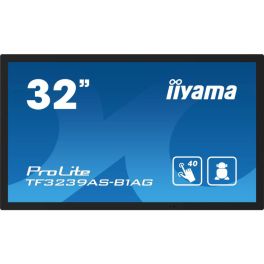
iiyama ProLite TF3239AS-B1AG
IN STOCK32'' all-in-one touchscreen with Android, perfect for kiosks, shops, or meeting rooms.- For kiosks, meeting rooms, shops, and more...
- 32'' Full HD screen
- Touchscreen with up to 40 touch points
- Built-in Android 11 system
- IP65 (front panel): water and dust resistant
- Compatible with display windows thanks to through-glass touch
- FailOver function: content always active
- Open Frame design: customised integration
£1,267.19£1,151.99 £1,382.39 Incl. VATRef: IIYTF3239ASCompare- World Cup SpecialFrom 14th April to 29th May 2026
Get 10% off TV stands when you buy a TV with a tuner using the code SUP10
Samsung BE75FX-H Business TV 75'' UK
IN STOCK75-inch 4K UHD professional display designed for professional use, with Tizen Smart TV, Samsung VXT cloud management and a three-sided borderless design.- For digital signage: 16/7 operation
- 75" 4K UHD display: large-format visuals with strong visual impact
- Samsung Business TV for combining TV broadcasting and promotional content
- Tizen™ Smart TV operating system: smooth, secure, and easy to manage
- Integrated 20 W speakers
- 3-sided bezel-less design: elegant integration
- Samsung VXT compatible for centralized remote management
£1,271.00£1,147.99 £1,377.59 Incl. VATRef: SABE75FXHUKCompare 
Hikvision DS-D6065UN-DP 65 Inch Signage
IN STOCK65-inch 4K UHD digital signage display with Android 13, 24/7 operation, remote management and versatile multimedia playback.- 65-inch 4K UHD display with 3840 x 2160 resolution and 500 nits brightness for professional digital signage
- Android 13 operating system with quad-core Cortex-A55 processor, 4 GB RAM and 32 GB storage
- 24/7 continuous operation designed for commercial advertising and information display environments
- Flexible multimedia playback supporting videos, images, audio, webpages, PDF files and live streaming
- Remote content management with centralised scheduling and multi-screen control functionality
- Horizontal and vertical installation for flexible wall-mounted deployment
- Wi-Fi, Bluetooth and multiple interfaces including HDMI, DisplayPort, USB and LAN connectivity
£1,224.99£1,037.99 £1,245.59 Incl. VATRef: HKDSD6065UNDPCompare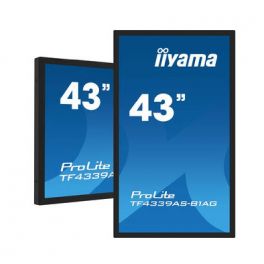
iiyama Prolite TF4339AS-B1AG
IN STOCKVersatile 43" professional touchscreen display with Full HD resolution.- 43-inch screen (109.2 cm)
- Full HD resolution (1920 x 1080 pixels)
- Anti-glare coating for clear visibility even in bright conditions
- 12-point touch technology
- Durable design for intensive daily use
- Metal casing
£1,369.00£1,328.99 £1,594.79 Incl. VATRef: IYTF4339ASB1AGCompare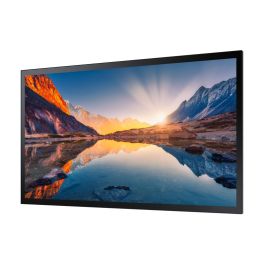
Samsung QM55B-T 55'' Digital Signage Panel
IN STOCKTransform your display experience with stunning 4K visuals.- Stunning 4K Resolution for crystal-clear visuals.
- Bright Display at 400 cd/m² for vibrant colours.
- 24/7 Operation ensures reliability for constant use.
- Touchscreen Capabilities for interactive experiences.
- Built-in Tizen 6.5 OS for seamless app integration.
£2,299.99 £2,759.99 Incl. VATRef: SAMQM55BTCompare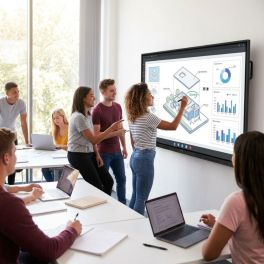
iiyama ProLite TE8613A-B2AG 86-inch 4K touchscreen
IN STOCK86-inch 4K interactive touchscreen with Android, iiWare and EDLA certification, designed for collaborative work and modern meeting rooms.- Uses: business collaboration, interactive education
- 86-inch 4K UHD screen: large display area
- Interactive touchscreen: precise multi-touch technology
- EDLA certified: direct access to Google services and apps
- Android with iiWare: integrated tools for whiteboarding and collaboration
- USB-C connectivity: video, data and power via a single cable
- Built-in speakers: for ready-to-use conferencing solutions
£1,750.99 £2,101.19 Incl. VATRef: IIYTE8613AB2AGCompare- World Cup SpecialFrom 14th April to 29th May 2026
Get 10% off TV stands when you buy a TV with a tuner using the code SUP10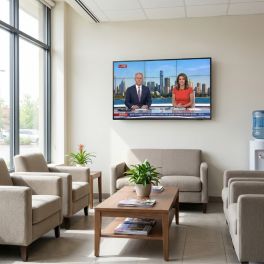
Samsung BE43FX-H Business TV 43'' UK
IN STOCK43" 4K UHD professional display designed for digital signage and professional TV, with Tizen, VXT cloud management and a 3-sided borderless design.- For digital signage: 16/7 operation
- 43" 4K UHD display: sharp and detailed image quality
- Samsung Business TV: broadcast TV and promotional content
- Tizen™ Smart TV system: smooth and secure performance
- 3-sided bezel-less design: elegant integration
- Samsung VXT compatible: remote content and display management
£471.00£425.99 £511.19 Incl. VATRef: SABE43FXHUKCompare 
iiyama ProLite T2755MSC-B1
Call us for availabilityThe 27” Full HD touchscreen for smooth interaction and dynamic content display!- 27’’ Full HD touchscreen with IPS panel
- Ultra-responsive 10-point multi-touch
- Matte anti-glare coating
- Fast 5 ms response time
- HDMI, DisplayPort, and USB 3.2 connectivity
- Adjustable tilt from 5° to 90°
- Built-in speakers
- VESA 100 x 100 mm mount compatible
£340.00£331.99 £398.39 Incl. VATRef: IIYT2755MSC-B1Compare
iiyama ProLite T2455MSC-B1
The ultra-slim 24" touchscreen that brings your display to life!- Ultra-responsive 10-point touchscreen
- Full HD IPS panel with accurate colours
- High brightness (400 cd/m²)
- Anti-fingerprint coating
- Built-in webcam and microphone
- USB 3.2 hub with 2 ports
- Edge-to-edge glass design
- VESA mount compatible
Discontinued4 of 1 ReviewsCheck the alternative productRef: IIYT2455MSC-B1Compare
iiyama ProLite T2452MSC-B1 Touchscreen Monitor
Call us for availabilityExperience the future of interaction with full HD clarity!- Seamless touch experience thanks to accurate PCAP technology.
- Vibrant visuals with IPS technology for stunning colour performance.
- Versatile connectivity options including HDMI and DisplayPort for easy setup.
- Multi-user capabilities support simultaneous touch for collaborative tasks.
- Designed for durability with an anti-fingerprint coating to resist smudges.
£291.86£244.99 £293.99 Incl. VATRef: IIYT2452MSCB1Compare
LG 43UH5N-E Professional UHD 4K Display
Discontinued43-inch UHD digital signage display designed for professional environments, with integrated webOS platform, high brightness and enhanced security.- Usage: indoor digital signage
- 43" UHD 4K professional display
- 500 cd/m² brightness
- 28% anti-glare coating: excellent readability
- Advanced security with LG Enhanced Kernel Protection (EKP)
- Slim bezel design: compact wall mounting
- Extensive connectivity: HDMI, DisplayPort, USB, LAN and RS-232C
- Integrated LG webOS platform with high-performance SoC
Check the alternative productRef: LG43UH5NECompare
Iiyama ProLite LH3260HS-B1AG
Call us for availability32’ Full HD professional screen with Android 11 and advanced content management.- Digital signage for business and retail
- 32-inch surface with Full HD resolution
- High brightness (500 cd/m²): perfect legibility in all conditions
- iiSignage²: powerful and intuitive content management software
- Signal FailOver function: uninterrupted content delivery
- EShare technology: wireless sharing via mobile phone
- 24/7 operation: continuous, reliable use
- Android 11: advanced customisation + application installation
£329.00£318.99 £382.79 Incl. VATRef: IIYLH3260HSUKCompare
iiyama ProLite T2252MSC-B2 Monitor
Call us for availabilityExperience touch technology with stunning Full HD clarity.- Touchscreen capability for interactive use.
- Full HD resolution provides sharp and clear visuals.
- Fast response time ensures smooth performance.
- Built-in USB hub for easy connectivity.
- VESA mount support for flexible installation options.
£185.00 £222.00 Incl. VATRef: IIYT2252MSCB2Compare
Philips 98BDL3650Q
Call us for availabilityStand out with this stunning 98-inch 4K digital signage display featuring Android 10, Wi-Fi connectivity, and professional 18/7 operation.- 98-inch 4K UHD Display: Massive screen with crystal-clear 3840 x 2160 resolution for impactful digital signage
- Professional 18/7 Operation: Reliable performance for extended daily use in commercial environments
- Android 10 System: Built-in processor with 3GB RAM and 16GB storage for smooth content delivery
- Wireless Connectivity: Built-in Wi-Fi for easy content management and updates
- Flexible Installation: Support for both horizontal and vertical orientation with VESA mounting
- Direct LED Backlighting: Delivers consistent brightness of 400 cd/m² across the entire screen
- Fail-safe Content: Automatic backup content playback system ensures continuous operation
- Remote Management: Cloud-based control system for efficient multi-display management
£6,399.99£5,570.99 £6,685.19 Incl. VATRef: PH98BDL3650QCompare
Samsung 13" Small Signage QB13C
Call us for availabilityCompact 13-inch Full HD display for digital signage, featuring built-in media playback and a wide range of applications in a business environment.- 13-inch Full HD for clear content in compact spaces
- Built-in media player for standalone playback without an external PC
- Compact design ideal for counters, shelves and small spaces
- Suitable for 24/7 operation for professional continuous use
- Versatile connectivity options for flexible integration
- Remote management for easy content management
£349.99£281.99 £338.39 Incl. VATRef: SAQB13CCompare
Samsung EM13D-X 13-inch colour e-paper display
Call us for availability13-inch ultra-low-power colour e-paper display for professional digital signage, ideal for digital signage applications without a continuous power supply.- Ultra-low power consumption: energy used only when content is updated
- 13” colour e-paper screen: glare-free display, similar to paper
- High resolution: crisp display for text, labels and signage
- No permanent power supply required: ideal for stand-alone installations
- Compact design: easy integration into retail outlets or offices
- Modern connectivity: simplified content updates
- Sustainable solution: eco-friendly alternative to traditional screens
£875.99£763.99 £916.79 Incl. VATRef: SAEPAPER13Compare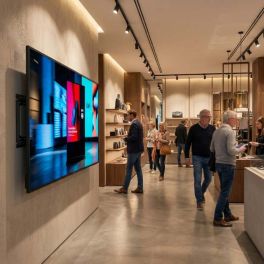
Pack Iiyama LH6560UHS 65-inch 4K Display + Wall Mount
Call us for availabilityIiyama 65" 4K UHD professional display bundle with a fixed wall mount (32–65"), ideal for digital signage installations in corporate environments.- Compatibility: screens from 32 to 75 inches
- Maximum load capacity: 100 kg
- Mount type: fixed
£1,028.95£902.08 £1,082.50 Incl. VATRef: IIYLH6560UHSB2AGSMCompare
Sony Bravia BZ40L 65-inch 4K Display + Wall Mount
Call us for availabilityPackage including a Sony Bravia 65" 4K UHD professional display and a Vision 32–75" wall mount, ideal for digital signage and corporate environments.- Special professional display: 24/7 operation
- 65'' panel with 4K UHD resolution
- HDR technology: sharp, detailed images
- Compatibility: screens from 32 to 75 inches
- Maximum load capacity: 100 kg
- Mount type: fixed
£1,929.95£1,559.74 £1,871.69 Incl. VATRef: SOFW65BZ40LSMCompare
iiyama ProLite LH5560UHS-B2AG 55" Display + Neomounts FPMA-C340BLACK ceiling mount
55-inch screen from iiyama + Neomounts FPMA-C340BLACK ceiling mount: Professional ceiling mounting for digital signage.- Usage: indoor digital signage
- Android 11: display without an external PC
- 55'' 4K UHD screen (3840 x 2160)
- Fully adjustable ceiling mount for 32–75" screens
- Maximum load capacity: 50 kg
- Flexibly adjustable with 25° tilt, 360° swivel, 6° rotation
Call us for availability5.0 of 1 Reviews£742.69£689.65 £827.58 Incl. VATRef: IIYLH5560UHSB2ASPLCompare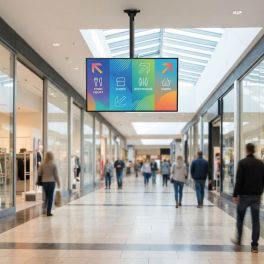
Pack iiyama ProLite LH6560UHS-B2AG 65" + ceiling mount Neomounts FPMA-C340BLACK
iiyama 65” display + Neomounts FPMA-C340BLACK ceiling mount: professional suspended installation for digital signage.- Fully adjustable ceiling mount for 32–75" screens
- Maximum load capacity: 50 kg
- Flexibly adjustable with 25° tilt, 360° swivel, 6° rotation
Call us for availability5.0 of 1 Reviews£972.69£905.96 £1,087.15 Incl. VATRef: IIYLH6560UHSB2AGSPLCompare
Characteristics and Core Functions
Indoor professional screens are designed to deliver visual comfort, reliability, and consistent performance in climate-controlled environments. Unlike consumer televisions, these commercial displays integrate features tailored to corporate, retail, and institutional use. Anti-glare treatments reduce reflections and eye strain, while slim designs allow seamless integration into modern interiors without compromising aesthetics.
| Medium–High Brightness (400–700 nits) | Balanced luminance ensures excellent visibility in typical indoor lighting without causing discomfort during prolonged viewing. |
| Full HD or 4K UHD Resolution | Sharp text and detailed imagery support professional content such as dashboards, presentations, and promotional visuals. |
| Anti-glare treatment | Matte surface coatings reduce reflections from lighting and windows, preserving legibility from multiple angles. |
| Wide viewing angles | IPS and advanced VA panels maintain colour accuracy across wide seating arrangements. |
| HDMI / USB / LAN / WiFi connectivity | Multiple inputs support both legacy and modern sources while enabling network-based control. |
| Remote content management | Centralised platforms allow IT teams to update content and monitor screens without physical access. |
| 16/7 or 24/7 operation | Commercial-grade components support extended daily use aligned with business hours. |
| Slim design and narrow bezels | Enables clean installations and supports video wall configurations in premium spaces. |
How to Select the Right Display for Your Requirements
- OK Space characteristics and lighting: evaluate ambient light levels and window exposure; brighter indoor areas may require higher-nit displays.
- OK Content type and viewing distance: text-heavy or data-rich content benefits from higher resolution, especially on larger screens.
- OK Orientation flexibility: confirm support for landscape and portrait modes if content strategy requires rotation.
- OK Integration with existing systems: check compatibility with content management platforms, AV infrastructure and corporate networks.
- OK Operational hours: match the display’s duty cycle to actual usage, from standard business hours to continuous operation.
- OK Touch functionality: assess whether interactive capability improves user experience for wayfinding, self-service or collaboration.
Applications Across Professional Environments
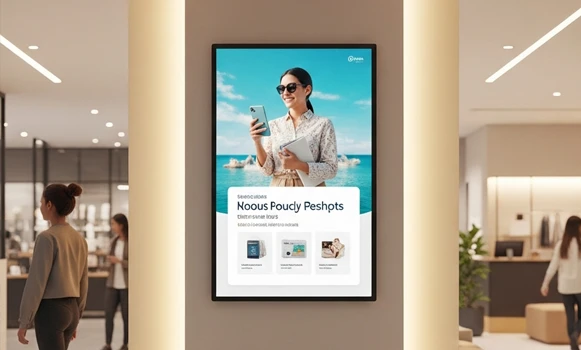
Corporate environments rely on indoor screens to maintain clear and consistent communication. Displays in reception areas provide visitor information and brand messaging, while internal screens share company news, performance indicators, and announcements across departments and locations.
Training rooms and learning spaces increasingly use large-format indoor screens to support modern teaching and collaboration methods. Interactive displays replace traditional whiteboards, allowing trainers to annotate digital content, save session outputs, and share materials instantly with participants.
Retailers use indoor advertising screens to influence purchasing decisions without the extreme brightness required for window displays. Strategically placed screens near decision points highlight promotions, product features, and social proof at the moment customers are evaluating options.
Educational institutions and public buildings deploy indoor screens for announcements, event calendars, wayfinding, and emergency messaging, ensuring information reaches students, staff, and visitors efficiently across large facilities.
Why Partner with Onedirect?
Onedirect specialises in indoor professional display solutions supported by extensive deployment experience. Our maintained inventory levels help keep project timelines on track, while efficient logistics reduce installation delays. As an official reseller for Samsung, LG, Philips, Sony, and iiyama, we supply authentic products with full manufacturer warranty coverage.
Our technical advisory services guide you through complex specification decisions, from screen size calculations based on viewing distance to network architecture considerations for multi-screen environments. This consultative approach ensures your display investment aligns with both immediate needs and long-term objectives.
With ongoing after-sales support, Onedirect remains available well beyond installation. From content management assistance to warranty coordination, our support teams help keep your indoor display infrastructure running smoothly with minimal disruption.
FAQ – Frequently Asked Questions
What defines an indoor professional display?
Indoor professional displays are designed for controlled environments and offer features such as anti-glare coatings, commercial-duty components, extended operating ratings, and professional connectivity not found on consumer TVs.
How bright should an indoor screen be?
Most indoor applications perform well between 400 and 700 nits. Spaces with large windows or strong artificial lighting may benefit from higher brightness to maintain visibility.
Is 4K necessary for indoor displays?
4K is recommended for large screens, close viewing distances, or detailed content such as dashboards and product imagery. Full HD is often sufficient for presentations and standard signage.
Can indoor displays run continuously?
Yes, many indoor displays are rated for 16/7 or 24/7 operation. The correct choice depends on how many hours per day the screen will be used.
Are indoor screens suitable for interactive applications?
Many indoor professional displays support touch functionality, making them suitable for interactive presentations, wayfinding, training, and self-service use cases.
Related Resources
Digital Signage Icon Meeting Room Displays Icon Display Accessories Icon