
My Cart



Long-Range Two-Way Radios
Greater Coverage, Stronger Connections: Radios Built for Long-Range Communication
Long-range two-way radios are the right solution when teams work across large areas. Whether you need long-range walkie-talkies for events, outdoor sites or infrastructure projects, the key factors are strong reception performance, stable signal processing, and a clear channel structure. A reliable long-range walkie-talkie helps teams stay connected efficiently across demanding professional environments.
- IconBest Seller
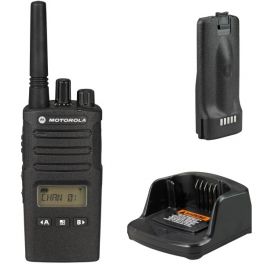
Motorola XT460 with Charger
License-free two-way radio: ideal for use in tough environments- PMR446 radio: no need for a license
- Robust metal casing for harsh environments
- Meets US Mil-Standard 810 C, D, E, F and G
- IP55: dust and water-resistant
- 8 channels, 219 codes
- Range up to 9km in line of sight, 13 floors or 16,250m2 in working environments*
- 16 pre-recorded channel names
- VOX/iVOX hands-free function
IN STOCK4.8 of 40 Reviews£181.99£129.99 £155.99 Incl. VATRef: MOXT460Compare 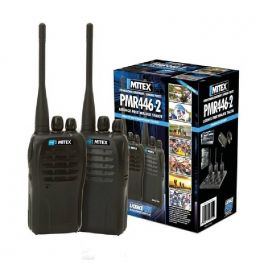
Mitex PMR446 Two-Way Radio - Twin Pack
Compact and hard wearing license-free radios- PMR446 license free radios
- Pre-programmed and ready to use
- Computer programming kit available for custom programming
- Compatible with most professional PMR446 radios (Motorola, Kenwood, Icom, etc)
- Upgradeable to 5 watts licensed frequencies for a small fee
- Scan function
- 16 channels (preset)
IN STOCK5 of 1 Reviews£154.15£137.99 £165.59 Incl. VATRef: MIT446TWINCompare- Onedirect Recommends
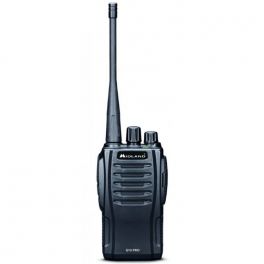
Midland G10 Pro
Free-to-use PMR446 walkie-talkie - ideal for on-site and road use- PMR446 Walkie-talkie: No licence required
- Easy to use for inexperienced users
- 32 channels (16 + pre-programmed) and 3 power levels
- Frequencies: New Band: 446.00625-446.19375 MHz
- Traditional Band: 446.00625-446.09375 MHz
- Auto Power Save function for automatic battery saving
- Headphone jack (Kenwood 2-pin)
IN STOCK4.9 of 9 Reviews£57.99 £69.59 Incl. VATRef: MIG10PROCompare 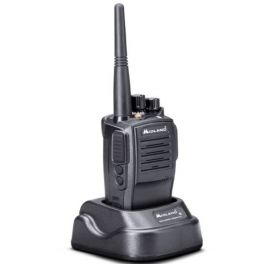
Midland G15 Pro
Licence-free, rugged and waterproof walkie-talkie - perfect for outdoor activities- Free to use, compact and waterproof PMR446 walkie-talkie
- Resistant to dust and immersion in water up to 1m for 30 minutes: IP67
- Licence-free: free communications with a range up to 10 km outdoors
- VOX function: hands-free functionality for hassle-free communication
- Up to 22 hours of battery life
IN STOCK4 of 2 Reviews£108.99 £130.79 Incl. VATRef: MIG15PROCompare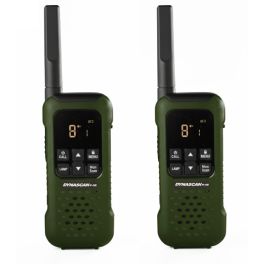
DYNASCAN F-15
IN STOCKSturdy, robust and waterproof unlicensed walkie talkie. Ideal for outdoor use.- Pair of license-free PMR446 walkie talkies
- 16 channels (8 preset + 8 programmable)
- Active VOX transmission
- Dual listening function
- IP67 standard: submersible, up to 1 m for 30 minutes
- LED torch
- Range of up to 7 km
- SOS emergency call button
£88.99 £106.79 Incl. VATRef: DYNF15Compare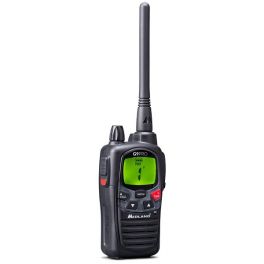
Midland G9 Pro
Robust license-free radio with emergency function, double PTT and IPx5 rating- 101 channels: 32 PMR446 + 69 LPD
- PTT dual for high or low transmissions
- IPX4 rating: extremely weatherproof
- Emergency function
- Vox function with TalkBack
- 12cm antenna for greater transmission
- Out of range function
IN STOCK5 of 22 Reviews£67.99 £81.59 Incl. VATRef: MIG9PROCompare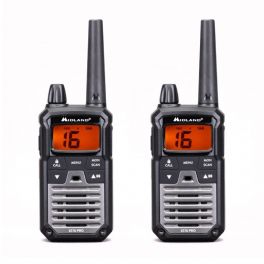
Midland XT70 PRO
IN STOCKWalkie-talkie with a range of up to 12 km, splash-proof with high performance and security- LPD/PMR446 dual band free talkie
- 32 PMR446 channels (16+16 preprog) + 69 LPD
- 38 CTCSS and 104 DCS on TX and RX
- VOX function with 9 selectable levels
- Large LCD display with backlighting
- Splash and water proof
- Vibrating call function
- Midland 2-pin headset connection
- EU to UK adaptor
£106.99 £128.39 Incl. VATRef: MIXT70PROCompare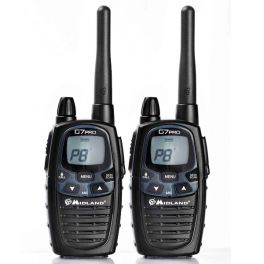
Midland G7L PRO Walkie Talkie
Professional, license-free 2-way radios- PTT button
- “Boost transmission” button for long distance conversations
- Room supervision
- Vibrate function
- 2-band: LPD and PMR446: free communications
- LPD-69 channels, PMR446 – 8 channels,
- VOX: Voice activation
- Backlit display
IN STOCK4.4 of 16 Reviews£150.00£124.99 £149.99 Incl. VATRef: MIG7PROLCompare
Dynascan L88 + Hook earpiece for Kenwood
8-channel PMR446 unlicensed walkie talkies, rugged, push-button selector with PTT hook earphone- Walkie talkie PMR446
- 8 channels
- 500 mW power
- Earphone hook
- Microphone "Push to Talk"
- Exclusive accessory for the Kenwood range
IN STOCK4.4 of 13 Reviews£115.98£57.21 £68.65 Incl. VATRef: DYNL881702ECCompare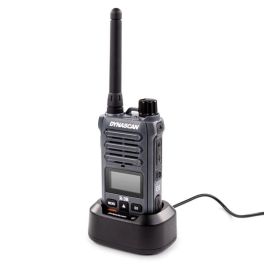
Dynascan R38 PMR446 licence-free radio
IN STOCKA professional, licence-free PMR446 radio with a compact design, clear audio quality and simple operation for everyday use.- PMR446 radio: instant, licence-free communication
- Compact and ergonomic design
- Clear audio transmission: reliable communication within the team
- VOX hands-free function
- Channel scanning and multiple sub-channels: flexible organisation
- Long battery life
- Robust design suitable for professional environments
£69.99 £83.99 Incl. VATRef: DYNR38Compare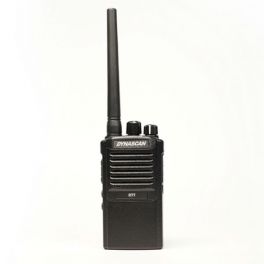
Dynascan R-77
A very robust PMR446 Walkie Talkie, programmable and customisable with advanced functions- PMR446 Walkie Talkie without compact and robust license
- Programmable and customizable through PC: Simple software
- 8 channels, CTCSS subtones and programmable DCS codes
- TOT transmission timer and priority scanning
- VOX function
- 600 mAh battery and battery saving function
- Kenwood type headphone jack
- Replaces Dynascan L44 plus
IN STOCK4.8 of 6 Reviews£85.99 £103.19 Incl. VATRef: DYNR77Compare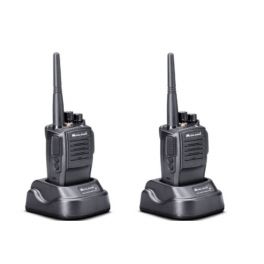
Set of 2 Midland G15 Pro
Set of 2 licence-free and robust radios with accessories- Licence-free PMR446 radios with up to 10 km range
- Compact, dust and waterproof
- Dustproof and submersible up to (1m/30 min): IP67
- Vox function: hands-free for smooth communication
- Up to 22 hours of battery life
- Compatible with accessories of the previous model Midland G15
- Can communicate with the G15 on channels 1-8
IN STOCK4.0 of 2 Reviews£217.98£211.44 £253.73 Incl. VATRef: MIG15PRODCompare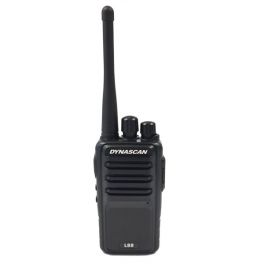
Dynascan L88
Robust license-free two-way radio with 8-channels
- Walkie talkie PMR446
- 8 channels
- 500 mW power
- Lithium-ion battery 1,600 mAH
- VOX function
- Scrambler (voice coding)
- noise suppression
- Integrated antenna
IN STOCK5 of 1 Reviews£98.99£41.99 £50.39 Incl. VATRef: DYNL88Compare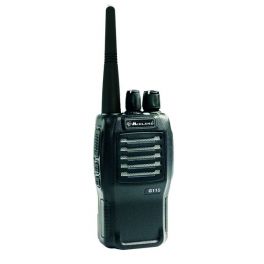
Midland G11 PRO
Free-to-use Midland walkie-talkie with aluminium housing - ideal for professional use- Unlicensed walkie-talkie for professional use
- 8 PMR446 standard channels
- Long 5 km range
- VOX function
- Strong with injected aluminium chassis
- Programming software (optional)
IN STOCK5 of 1 Reviews£83.99 £100.79 Incl. VATRef: MIG11PROCompare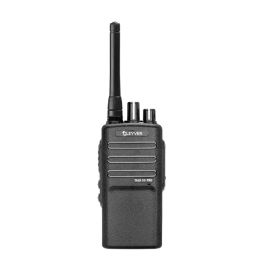
Cleyver Talk 55 Pro
Rugged walkie talkie with a high-capacity battery, designed for 100% free communication- PMR 446: Licence-free
- IP55: Dust-resistant and splash-proof
- With 16 channels and 214 programmable DSC codes
- VOX function for hands-free use
- Extended battery life: 2200 mAh battery
- Low battery alert and power-saving mode
- 100% compatible with Motorola fleets and 2-pin accessories
IN STOCK5 of 2 Reviews£85.00£84.99 £101.99 Incl. VATRef: ODTALK55PROCompare
Kenwood TK-3701DE Walkie Talkie
Robust license-free analog-digital hybrid walkie talkie - maximum durability- Analog PMR446 and digital DPMR446 hybrid radio
- Free calls without subscription or license
- Range of 10 km (optimal conditions)
- 48 channels: 16 analog and 32 digital
- IP55: Protection against dust and water splashes
- Complies with military standards MIL-STD 810 C, D, E, F, G
- Very high-quality DSP digital sound
- Communication encryption
- VOX and SCAN functions
IN STOCK4.6 of 36 Reviews£224.99£162.99 £195.59 Incl. VATRef: KWTK3701DECompare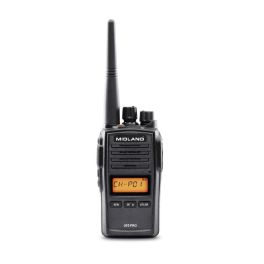
Midland G18 Pro NC
Robust licence-free PMR446 walkie-talkie with military-grade compliance and Noise Cancelling for clear communication in extreme environments- PMR446 walkie-talkie – licence-free and ready to use
- High-visibility backlit LCD screen
- 99 channels: 16 main + 83 pre-programmed
- IP67 protection: dust- and waterproof (1 m / 30 min) and MIL-STD 810G compliant
- Battery life of up to 22 hours
- Features: Dual Watch, Scrambler, RRM, VOX, and FM radio
- 2-pin Motorola-type headset connector
- Noise cancelling for clear communication
IN STOCK5 of 1 Reviews£144.99 £173.99 Incl. VATRef: MIG18PRONCCompare- IconBest Seller
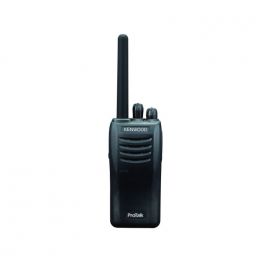
Kenwood TK-3501 License-Free Radio
Portable and compact PMR446 analogue radio- communication simplified- Certified PMR446: License-free analog radio
- Quick start- works out of the box
- Up to 9 km range
- 16 channels/ 8 PMR446 frequencies
- Military standard compliance
- Certified IP54: durable and water-resistant
- Lightweight
- Simple and compact design for ease of use
- Loud and clear audio: VOX function
- Push to Talk (PTT) feature
- Up to 20 hours of battery life and 14 hours of talk time
Call us for availability4.3 of 46 Reviews£169.05£151.19 £181.43 Incl. VATRef: KW3501Compare
Key features and main functions
Long-range performance is not down to one single feature. It depends on strong reception, excellent radio discipline and the right operating conditions. Teams spread across sites, warehouses, car parks, or visitor areas find long-range radio devices particularly useful. In practice, what matters is how stable the connection remains when people, buildings or terrain come between users. This is where high-performance models stand out, with strong reception sensitivity, clean audio processing and clear channel organisation.
| Optimised antenna technology | Supports stable reception within permitted operating standards. |
| High reception sensitivity | Important for keeping speech clear even when the signal is weaker. |
| Digital signal processing (model-dependent) | Can improve speech clarity and reduce interference. |
| dPMR446 support (model dependent) | Digital operation can make channels more efficient. |
| CTCSS/DCS sub-channels | Helps organise radio traffic and minimise interference. |
| Multi-channel function | Separates teams clearly, for example, security, technical and logistics staff. |
How to choose the right product?
- OKCompare open ground and built-up areas: open fields are easier than city centres or concrete structures, so plan realistically.
- OKDefine the communication model: who needs to speak to whom? Separate several teams clearly rather than using one channel for everything.
- OKUse digital features where relevant: when many devices are active, digital models can improve order and clarity.
- OKPlan battery reserves: long operations require a charging strategy with multi-chargers or spare batteries.
- OKConsider ergonomics and accessories: a speaker, microphone or headset can make work much faster.
- OKConsider compatibility with mounts and accessories.
- OKTake operating duration into account, whether for extended daily use or continuous operation.
Professional use cases
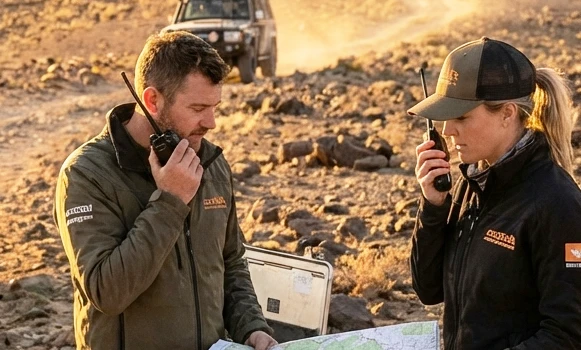
On large construction sites and infrastructure projects, long-range walkie-talkie devices connect supervisors, banksmen, logistics teams and security staff. At festivals and events, entrance teams, stage crews, technical staff, and security are coordinated, especially when mobile networks are overloaded. In agriculture, forestry and on large construction sites, a long-range walkie-talkie is also highly useful because teams often work across wide areas rather than from one fixed point.
Why Onedirect as your partner?
OneDirection helps you turn range requirements into a practical radio solution, including accessories, charging infrastructure, and, where relevant, suitable programming. You benefit from fast delivery, reliable availability and advice based on your real working environment.
FAQ (Frequently asked questions)
What range can licence-free radios achieve?
The range of licence-free radios such as PMR446 depends heavily on the environment. In open areas, communication may be possible over several kilometres, while buildings, woodlands, and uneven terrain reduce coverage. In typical working environments such as warehouses, events or construction sites, real-world range usually varies from a few hundred metres to several kilometres.
Which licence-free radios offer the best range?
Devices designed as walkie-talkies with the longest range usually combine quality antennas, stable signal processing and reliable battery performance. Modern digital PMR446 models can also provide a more stable connection thanks to improved signal handling. Rugged construction is equally important for dependable professional use.
How can you improve the range of a licence-free radio?
In practice, you can often improve the range of PMR446 devices. A clear position with fewer obstacles between radios helps significantly. Outdoor use, higher positioning and choosing a model with a high-quality antenna can all make the connection more stable.
Are long-range radios always licence-free?
Not necessarily. Licence-free radios operate within PMR446 regulations and are limited by legal transmission power rules. This means their range remains restricted. For greater distances, licensed business radio systems are often used. However, for many business and outdoor applications, licence-free models still provide sufficient coverage.
Related resources
Long-range Two-way Radios Icon Best long-range walkie-talkies Icon