
My Cart



TOP 7 – Best Long-Range Walkie-Talkies 2026
An essential tool across many professional sectors, a long-range walkie-talkie is essentially a licensed radio device. Unlike licence-free models, it operates on private, secure frequencies. This means that the actual range no longer depends solely on the device itself but largely on the licence issued by the relevant regulatory authority (e.g. ARCEP).
When choosing the right model, several factors come into play: durability, range, available frequencies, and additional features are among the key criteria to consider.
To make your decision easier, we’ve put together a selection of the 7 best long-range radios for 2026. This way, you can quickly find the model that best suits your needs.
IconTOP 10 Icon Comparison table IconFAQ

Our winning trio
Number 1
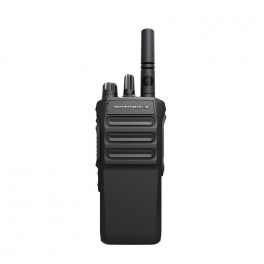
Advanced noise cancellation and loud, clear voice transmission.
Premium options for GNSS, Wi-Fi, Bluetooth, and more.
Connects with Motorola's Safety Reimagined ecosystem.
Number 2

Hidden display
VOX function (hands-free communication with a headset)
256 channels: flexible communication
Number 3
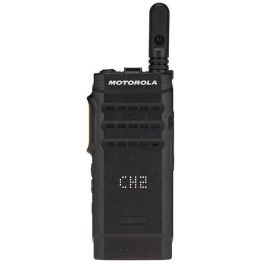
22mm thick, easy to carry in pockets or bags.
Patented Range Max technology and long battery life.
Supports both analog and digital modes with UHF and VHF models available.
Our complete ranking:
Best overall model
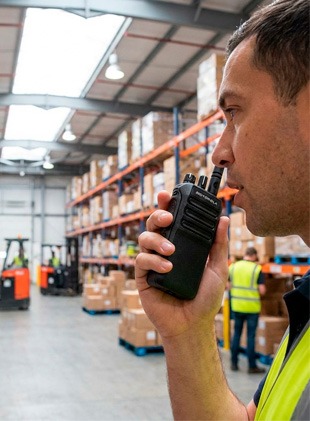
The Motorola R7A is a durable, feature-rich two-way radio offering exceptional audio clarity and rugged construction, ideal for tough environments. It integrates seamlessly into Motorola's communication ecosystem for enhanced connectivity and functionality. By Sector
Construction
Features
Lithium-Ion batteries
Channels: 64
Licensed VHF
IP68
Pros
Advanced noise cancellation and loud, clear voice transmission.
Premium options for GNSS, Wi-Fi, Bluetooth, and more.
Connects with Motorola's Safety Reimagined ecosystem.
Cons
Advanced features only available in higher-tier models.
Max 64 channels may not suitable for large operations.
Best budget model
The Dynascan RL-300 is a walkie-talkie known for its reliability. Ideal for outdoor communication, this UHF device uses its 256 channels to deliver clear, uninterrupted transmissions. With a headset connector, VOX hands-free function and hidden display, it’s a perfect fit for warehouses, logistics operations, construction sites and more.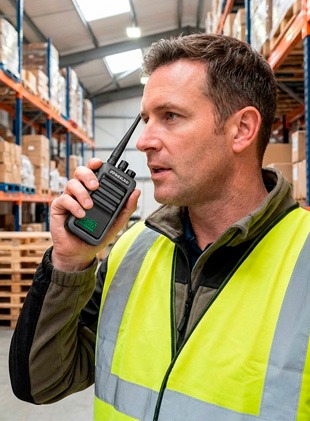
Features
Lithium-Ion batteries
Channels: 256
Licensed UHF
IP55
Pros
Hidden display
VOX function (hands-free communication with a headset)
256 channels: flexible communication
Cons
No keypad
Not compliant with military standards
Best ultra-slim long-range model
The Motorola SL1600 is an ultra-slim, rugged two-way radio with intuitive controls, enhanced range, and IP54-rated durability, perfect for portable and reliable communication in various environments.
Features
Lithium-Ion batteries
Channels: 1000
Licensed UHF
IP54
Pros
22mm thick, easy to carry in pockets or bags.
Patented Range Max technology and long battery life.
Supports both analog and digital modes with UHF and VHF models available.
Cons
Requires an additional £10 per radio for programming.
Active View LED display lacks advanced visuals.
Best model for maritime use
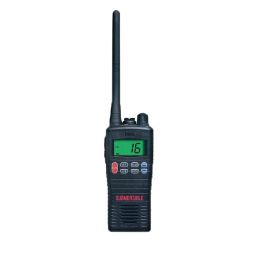
The Entel HT644 is a rugged, marine-grade handheld radio with IP68 submersibility, pre-programmed marine and weather channels, advanced audio features, and intelligent battery technology, ideal for life at sea.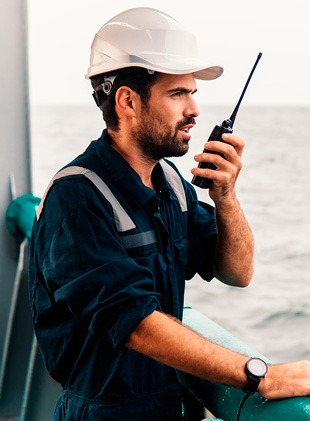
Features
58 marine channels, 10 weather channels, 36 programmable channels
Marine VHF
IP68
Pros
Li-Ion battery with charge tracking and no memory effect for longevity.
Large LCD display and glove-friendly 7-button keypad for easy operation.
Channel scan, monitor, and a shortcut to channel 16 enhance usability.
Cons
Limited appeal outside maritime environments.
No modern features like Bluetooth or Wi-Fi.
Best model for hunting
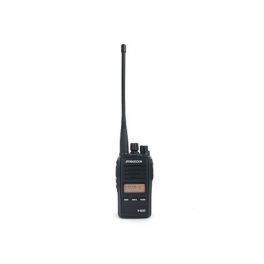
The Dynascan V-600 is a durable, IP67-rated VHF walkie-talkie designed for hunters, featuring 128 programmable channels, an SOS emergency button, and compatibility with popular VHF models.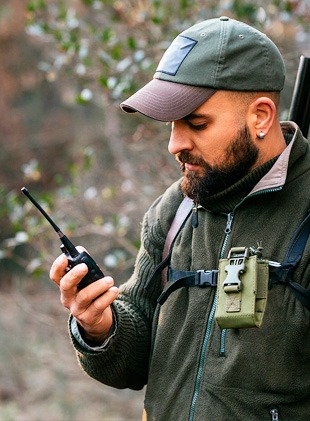
Features
Lithium-Ion batteries
Channels: 255
Licensed VHF
IP67
Pros
Anti-shock metal structure ensures durability in tough environments.
LCD display and keypad lock make it user-friendly.
Compatible with Motorola GP340 VHF, DP1400 VHF, and CP040 VHF models.
Cons
VHF operation requires a license, adding complexity.
Missing Bluetooth, Wi-Fi, or GPS for extended functionality.
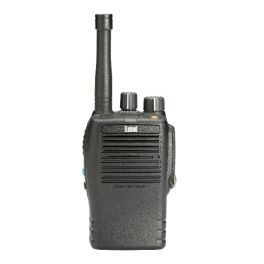
Best model for critical operations
The Entel DX482 UHF is a rugged and versatile digital two-way radio designed for professional use in challenging environments. It operates in both digital and analogue modes, providing flexibility and compatibility with existing systems. The radio is IP68-rated for maximum protection against water and dust and features advanced audio quality with noise cancellation. It also includes programmable buttons, a high-capacity battery, and enhanced safety features, making it ideal for demanding work conditions.
Features
Lithium-Ion batteries
Channels: 16 - 2
Licensed UHF
IP68
Pros
Dual-mode operation
IP68 water and dust resistance
Excellent audio quality
Cons
Higher cost due to advanced features
Best model for lone workers
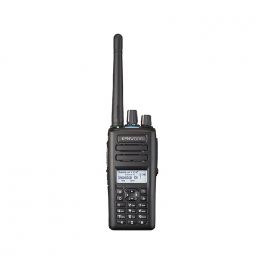
The Kenwood NX-3220E is a rugged, multi-protocol VHF walkie-talkie with advanced digital and analogue features, ideal for challenging environments, offering seamless communication, safety, and durability. By Sector
Hotels and restaurants

Features
Lithium-Ion batteries
Channels: 64
Licensed VHF
IP67
Pros
Enables efficient fleet management and tracking.
Illuminated keypad, backlit LCD display, and multi-colour LED indicators.
Cons
Advanced features may require additional training to use effectively.
Standard connector limits compatibility with third-party accessories.
| 1 | 2 | 3 | 4 | 5 | 6 | 7 | |
| ATEX certified | Without ATEX certification | Without ATEX certification | Without ATEX certification | Without ATEX certification | Without ATEX certification | Without ATEX certification | Without ATEX certification |
| Battery type | Lithium-Ion batteries | Lithium-Ion batteries | Lithium-Ion batteries | Lithium-Ion batteries | Lithium-Ion batteries | Lithium-Ion batteries | |
| Channels - Sub-channels - Codes | Channels: 64 | Channels: 256 | Channels: 1000 | 58 marine channels, 10 weather channels, 36 programmable channels | Channels: 255 | Channels: 16 - 2 | Channels: 64 |
| Frequency | Licensed VHF | Licensed UHF | Licensed UHF | Marine VHF | Licensed VHF | Licensed UHF | Licensed VHF |
| IP Rating | IP68 | IP55 | IP54 | IP68 | IP67 | IP68 | IP67 |
| Military standard | Confirmed to military standard | Not confirmed to military standard | Not confirmed to military standard | Confirmed to military standard | Not confirmed to military standard | Confirmed to military standard | Confirmed to military standard |
| Size | 132 x 56 x 37 mm | 124x59x37mm | 121 x 55 x 19.8 mm | 59.5 x 130 x 37mm | 115 x 55 x 35 mm | ||
| SOS button | With SOS button | Without SOS button | With SOS button | Without SOS button | With SOS button | With SOS button | With SOS button |
| Standby time / Talk time | Upto 21.5h | 16h | 14h | ||||
| Use | For intensive use | For intensive use | For intensive use | For intensive use | For intensive use | For intensive use | For intensive use |
FAQ - FREQUENTLY ASKED QUESTIONS
What is the maximum range of a radio device?
From a purely technical perspective, there is no fixed maximum range for a licensed walkie-talkie. What really matters is the coverage area defined when applying for the radio licence with the relevant regulatory authority (e.g. ARCEP).
By using relay stations, communication can cover very large distances – theoretically even across many kilometres.
Important: Legally, the permitted range always corresponds to the area specified in the licence. Using the device outside this area is not recommended, as it is no longer covered by regulatory approval.
Which features should you consider when buying a long-range model?
If you’re looking for a high-performance radio for extended distances, you should focus on the following key criteria:
- System range
- Device durability (e.g. protection against water and impacts)
- Battery life for long working days
- Audio quality and speech clarity
- Number of available channels
- Additional features such as VOX hands-free function or accessory compatibility (headsets, speaker microphones, etc.)
These factors will help you choose a model that reliably fits your working environment.
Analogue vs digital signal: what’s the difference?
Although analogue and digital radios often look similar on the outside, they differ significantly in both technology and communication quality.
Analogue:
Analogue radios use traditional radio frequencies for transmission. Since communication takes place over a single channel, interference can occur. In addition, audio quality tends to degrade more noticeably over distance.
Digital:
Digital models were developed to overcome the limitations of analogue technology. They offer more stable connections, clearer audio and often additional features. Sound quality is generally much better, closer to that of a mobile phone call. However, purely digital devices are not compatible with analogue radios.
What does the IP rating mean?
The IP rating (Ingress Protection) indicates how well a device is protected against dust and water.
First digit: Protection against solid particles such as dust
Second digit: Protection against moisture or water
The rule is simple: the higher the numbers, the better the protection.
Quite simply: the higher the number, the better the protection! Want to learn more about IP ratings? Take a look at our dedicated page.