
My Cart



2, 4, 6 or 8+ Unit Kits
- Back to WorkPromotional price valid until 25/09/2026.
Extra discount: £25 off orders over £400 with BACK25
£50 off orders over £700 with BACK50
£80 off orders over £1,000 with BACK80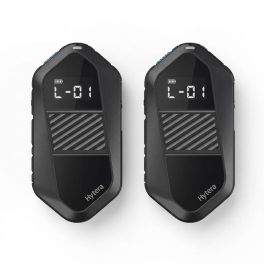
Set of 2 Hytera S1e PMR446 walkie-talkies
IN STOCKPack of 2 Hytera S1e PMR446 radios with AI noise reduction, up to 22 hours’ battery life and channel programming via an app for effective team coordination.- Compact and lightweight design for teams in shops, hotels, restaurants and warehouses
- Licence-free PMR446 communication
- Active AI-powered noise reduction: clear communication even in busy areas
£287.98£279.34 £335.21 Incl. VATRef: HYTS1EPACKx2Compare 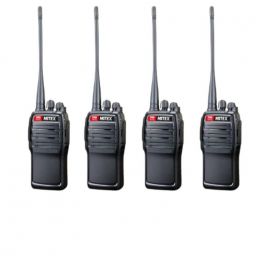
Mitex General DMR UHF Quad Pack
IN STOCKRobust quad-pack of DMR two-way radios, engineered for professionals requiring durable and dependable communication solutions- Dual-mode radio device with a compact design
- Operational in both digital and analogue modes
- 16 digital channels + 16 analogue channels
- Scanning capability for flexible communication
- Coverage of 10km for urban use; 25km for rural use
- Versatile applications in motorsports, industrial settings, education, retail, and more
- Interoperable with current Mitex editions: Mitex General, Gen X, and Pro Up.
£549.96£465.56 £558.67 Incl. VATRef: MITGENDMRQUKCompare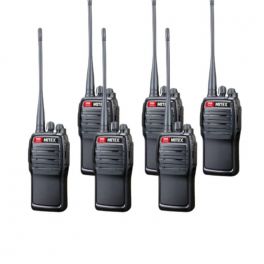
Mitex General DMR UHF Six Pack
IN STOCKSix-pack of DMR two-way radios for professionals requiring durable and dependable communication solutions- Dual-functional radio device with a compact and streamlined design.
- Operates seamlessly in both digital and analogue modes.
- Provides 16 channels for digital communication and an additional 16 channels for analogue communication.
- Features scanning capabilities for flexible and adaptive communication.
- Offers a coverage range of 10km in urban areas and an extended reach of 25km in rural settings.
- Versatile applications spanning across motorsports, industrial environments, education, retail, and more.
- Interoperable with existing Mitex editions, including Mitex General, Gen X, and Pro Up.
£824.94£698.34 £838.01 Incl. VATRef: MITGENDMRSUKCompare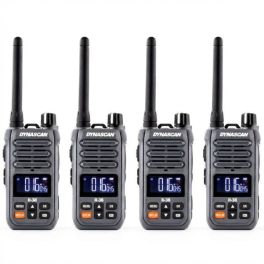
Set of 4 PMR446 Dynascan R38 walkie-talkies
IN STOCKA set of four professional licence-free PMR446 radios with a compact design, offering clear audio quality and ease of use for everyday use.- PMR446 radio: instant, licence-free communication
- Compact and ergonomic design
- Clear audio transmission: reliable communication within the team
£279.96£271.56 £325.87 Incl. VATRef: DYNR38X4Compare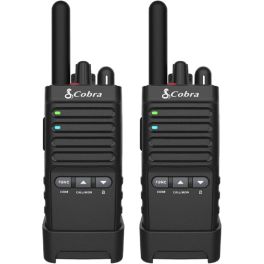
Cobra PX650 Business PMR446 Radio 2-Pack
IN STOCKProfessional PMR446 business radios with IP54 protection, 18-hour battery life and extended indoor coverage for reliable team communication.- PMR446 radios designed for retail, hospitality, warehouses
- IP54 splashproof protection for demanding working conditions
- Up to 18 hours battery life supports full-shift communication
- 16 channels with 121 privacy codes
- Emergency alert and VOX mode improve safety and enable hands-free communication.
- Compact business-ready design with rotatable holster
£106.99£86.99 £104.39 Incl. VATRef: CBPX650Compare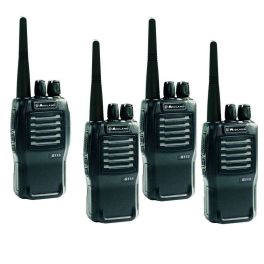
Midland G11 Pro Quad Pack
4-pack of robust, licence-free two-way radios, perfect for professional use.- Unlicensed walkie-talkie for professional use
- 8 PMR446 standard channels
- Long 5 km range
IN STOCK5.0 of 1 Reviews£439.96£387.96 £465.55 Incl. VATRef: MIG11PROQCompare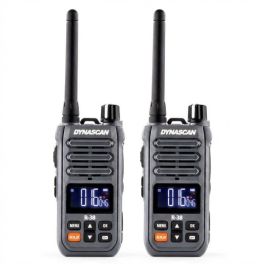
Set of 2 PMR446 Dynascan R38 walkie-talkies
IN STOCKA set of two professional licence-free PMR446 radios with a compact design, offering clear audio quality and ease of use for everyday use.- PMR446 radio: instant, licence-free communication
- Compact and ergonomic design
- Clear audio transmission: reliable communication within the team
£139.98£135.78 £162.94 Incl. VATRef: DYNR38X2Compare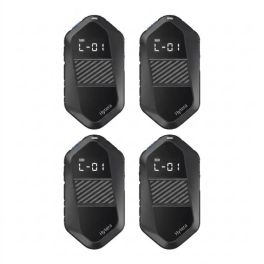
Set of 4 Hytera S1e PMR446 walkie-talkies
IN STOCKA pack of 4 Hytera S1e PMR446 radios designed for professional teams, featuring AI-powered noise reduction, a battery life of up to 22 hours and simplified channel programming via a mobile app.- Compact and lightweight design for teams in shops, hotels, restaurants and warehouses
- Licence-free PMR446 communication
- Active AI-powered noise reduction: clear communication even in busy areas
£575.96£558.68 £670.42 Incl. VATRef: HYTS1EPACKX4Compare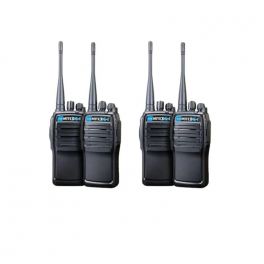
Mitex PMR446 Xtreme2 Quad Pack
Quad Pack of IP66 Rated Two-Way Radios Ideal for Harsh Environments- Licence free
- Boasts an IP66 Rating for durability
- Compact, lightweight, and durable design
- Versatile compatibility with Motorola, Kenwood, and Icom radios
- Explore additional accessories
IN STOCK5.0 of 1 Reviews£333.30£308.44 £370.13 Incl. VATRef: MIT446X2QUKCompare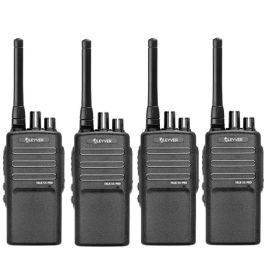
Cleyver Talk 55 Pro 4-Pack
Pack of 4 rugged walkie-talkies, designed for 100% free communication in demanding environments.- PMR 446: Licence-free
- IP55: Dust-resistant and splash-proof
- With 16 channels and 214 programmable DSC codes
IN STOCK5.0 of 2 Reviews£340.00£329.76 £395.71 Incl. VATRef: ODTALK55PROX4Compare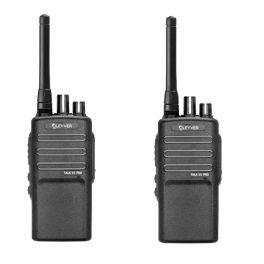
Cleyver Talk 55 Pro 2-Pack
Pack of 2 robust walkie-talkies, designed for 100% free communication in demanding environments.- PMR 446: Licence-free
- IP55: Dust-resistant and splash-proof
- With 16 channels and 214 programmable DSC codes
IN STOCK5.0 of 2 Reviews£170.00£164.88 £197.86 Incl. VATRef: ODTALK55PROX2Compare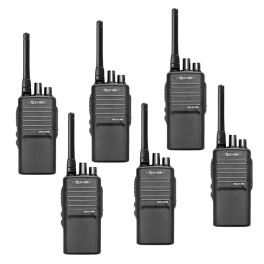
Cleyver Talk 55 Pro 6-Pack
Pack of 6 robust walkie-talkies, designed to communicate 100% for free in demanding environments.- PMR 446: Licence-free
- IP55: Dust-resistant and splash-proof
- With 16 channels and 214 programmable DSC codes
IN STOCK5.0 of 2 Reviews£510.00£494.64 £593.57 Incl. VATRef: ODTALK55PROX6Compare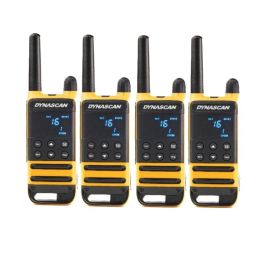
Dynascan P19 Quad
Quad pack of license-free, durable walkie-talkies with 2 cases including accessories and a range of up to 10 km – for limitless communication!- Rechargeable Ni-MH battery, 800mAh included
- Hidden screen (LED), flashlight, and FM radio
- iVOX/VOX function for hands-free use
IN STOCK4.8 of 4 Reviews£149.98£145.48 £174.58 Incl. VATRef: DYNADP19QUADCompare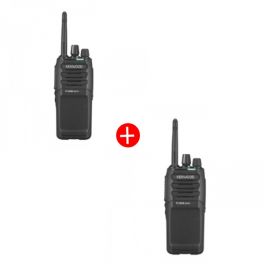
Kenwood TK-3701DT - Twin Pack
IN STOCKRobust two-way radio twin pack with analogue and digital capabilities- PMR446 analog and digital DPMR446 hybrid radio twin pack
- Free calls without subscription or license
- 10 km range
- 48 channels: 16 analog and 32 digital
- IP55: Protection against dust and water splashes
- Meets military standards MIL-STD 810 C, D, E, E, F, G
- Very high-quality digital DSP sound
- Communications Encryption
- VOX and SCAN functions
£390.60£316.20 £379.44 Incl. VATRef: KWTK3701DTDUKCompare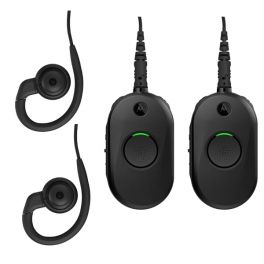
Motorola CLP446e 2 Pack
2 license-free PMR446 Walkie Talkies with hands-free function (Vox) - ideal for intensive use- Walkie Talkie for hospitality, point-of-sale, and outdoor use
- With Handsfree function (Vox)* and secure accessories
- Drop, water, dust, and vibration resistant (IP54)
- License free communication
- Discreet and elegant design with a wide range of up to 7km
- Battery life to keep up with the hectic pace (up to 18h)
- Voice-assisted operation and intelligent status light
- *Wired only
Call us for availability4.8 of 10 Reviews£428.00£232.78 £279.34 Incl. VATRef: MOCLP446EDCompare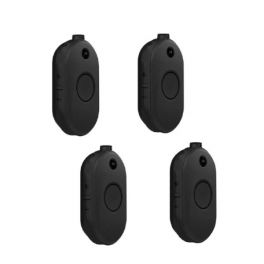
Motorola CLP446e Quad Pack
4 hands-free PMR446 Walkie Talkies: elegant and rugged with hands-free function (Vox) - ideal for heavy-duty use.- Walkie Talkie for hospitality, point-of-sale and outdoor use
- With handsfree function (Vox)* and secure accessories
- Drop, water, dust and vibration resistant (IP54)
- License-free communication
- Discreet and elegant design with wide range up to 7km
- Battery life to keep up with the hectic pace (up to 18h)
- Voice-assisted operation and intelligent status light
- *Wired only
Call us for availability4.8 of 10 Reviews£856.00£465.56 £558.67 Incl. VATRef: MOCLP446EQCompare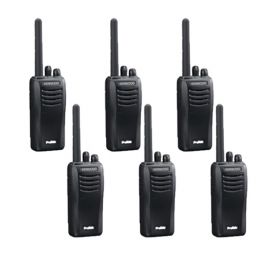
Kenwood TK-3501E 6-Pack
Radio with long range for outdoor use in a 6-pack- Certified PMR446: License-free analog radio
- Quick start- works out of the box
- Up to 9 km range
Call us for availability4.3 of 47 Reviews£1,014.30£651.78 £782.14 Incl. VATRef: KW3501SIXCompare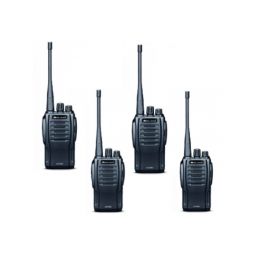
Midland G10 Pro Quad Pack
Pack of 4 Midland G10 Pro licence-free radios, ideal for use on construction sites and on the road.
- PMR446 Walkie-talkie: No licence required
- Easy to use for inexperienced users
- 32 channels (16 + pre-programmed) and 3 power levels
Out of stock4.9 of 9 Reviews£263.96£232.76 £279.31 Incl. VATRef: MIG10PROQCompare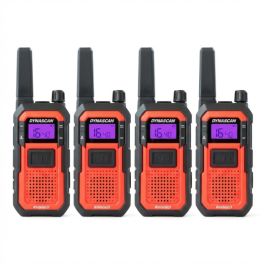
Pack of 4 Dynascan Rugged PMR446 walkie-talkies
Call us for availabilityA set of four robust PMR446 radios designed for professional use, IP67-certified, with a long battery life and features such as SOS, VOX and Dual-PTT.- PMR446 radio: instant, licence-free communication
- IP67 rating for protection against dust and water
- Dual PTT and SOS button: quick and safe operation
£207.96£201.72 £242.07 Incl. VATRef: DYNRUGGEDX4Compare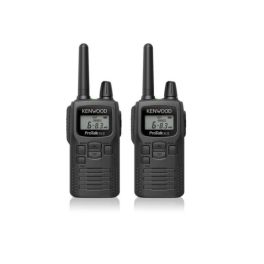
Pack 2x Kenwood PKT-300E
Call us for availabilityA compact, licence-free PMR446 radio with clear sound, simple operation and a robust design for professional communication.- PMR446 frequency: licence-free use
- 16 channels with scan function
- LCD screen and LED indicators: intuitive operation
£259.98£201.74 £242.09 Incl. VATRef: KWPKT300X2Compare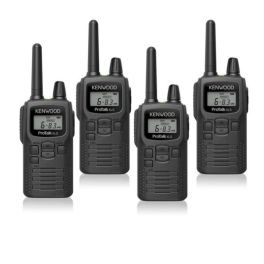
Pack 4x Kenwood PKT-300E
Call us for availabilityKenwood PKT-300E 4-pack, licence-free PMR446 radios, compact, robust, including chargers- PMR446 frequency: licence-free use
- 16 channels with scan function
- LCD screen and LED indicators: intuitive operation
£519.96£403.48 £484.18 Incl. VATRef: KWPKT300X4Compare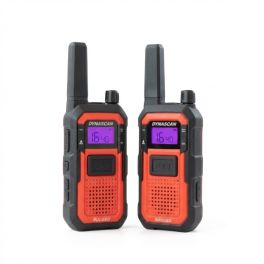
Pack of 2 Dynascan Rugged PMR446 Walkie-Talkies
Call us for availabilityA set of two robust PMR446 two-way radios designed for professional use, IP67-certified, with a long battery life and features such as SOS, VOX and Dual-PTT.- PMR446 radio: instant, licence-free communication
- IP67 rating for protection against dust and water
- Dual PTT and SOS button: quick and safe operation
£103.98£100.86 £121.03 Incl. VATRef: DYNRUGGEDX2Compare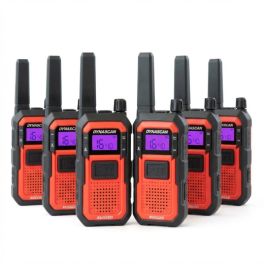
Pack of 6 Dynascan Rugged PMR446 walkie-talkies
Call us for availabilityA set of six rugged PMR446 radios designed for professional use, IP67-certified, with a long battery life and features such as SOS, VOX and Dual-PTT.- PMR446 radio: instant, licence-free communication
- IP67 rating for protection against dust and water
- Dual PTT and SOS button: quick and safe operation
£311.94£302.58 £363.10 Incl. VATRef: DYNRUGGEDX6Compare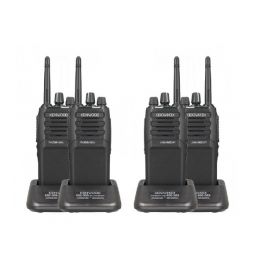
Pack of 4 Kenwood TK3701DE Walkie Talkies
The translation is: Rugged License-Free Hybrid Analog-Digital Walkie-Talkie - Maximum Durability- Analog PMR446 and digital DPMR446 hybrid radio
- Free calls without subscription or license
- Range of 10 km (optimal conditions)
Out of stock4.5 of 36 Reviews£899.96£632.40 £758.88 Incl. VATRef: KWTK3701DEQCompare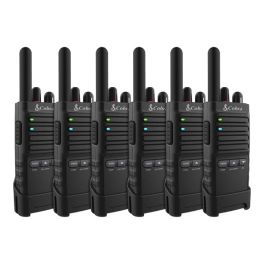
Cobra PX650 Business PMR Radios 6-Pack
Call us for availabilityProfessional six-radio PMR446 communication kit with IP54 protection, charging station and long battery life for coordinated business teams.- Complete 6-radio kit designed for retail, hospitality, logistics and event coordination
- Licence-free PMR446: immediate deployment without subscription costs
- 6-way charging station simplifies charging and storage
- IP54-rated protection offers resistance against dust and water splashes
- Up to 18 hours battery life: continuous communication during long shifts.
- 16 channels with 121 privacy codes
- VOX hands-free functionality improves productivity for staff on the move
£283.99 £340.79 Incl. VATRef: CBPX650BCH6Compare
Key features and main functions
Two-way radio sets are not just about quantity. As team size increases, so do the requirements for charging organisation, accessories, channel structure and backup planning. A good walkie-talkie set ensures all devices are aligned, use the same channels and operate consistently in daily use. This is especially important when teams need to be deployed quickly or staff frequently rotate. Depending on the application, options include licence-free PMR446 sets and digital two-way radio sets (DMR / dPMR), as well as UHF or VHF solutions, allowing adaptation to team size, range and environment.
| Multi-device configuration with identical channel programming | All radios in the set are prepared uniformly and ready to use together immediately. |
| Shared charging infrastructure | Single or multi-unit chargers simplify distribution, return and daily organisation. |
| Licence-free or licensed options | PMR446 for simple rollout, UHF/VHF or digital systems for more advanced requirements. |
| Optional digital (DMR / dPMR) or analogue | Choose between basic voice communication or more structured radio operation. |
| Consistent accessory ecosystem | Headsets, hand microphones and batteries can be standardised across the team. |
| High battery capacity for team use | Suitable for long shifts, extended operations or project-based work. |
| Plug & play readiness | Reduced setup effort and less coordination during deployment. |
How to choose the right product?
- OK Plan team size realistically: consider not only current users but also spare units.
- OK Consider the working environment: indoor, outdoor or construction sites determine the right radio technology.
- OK Define the charging concept early: as set size increases, centralised charging becomes more important.
- OK Standardise accessories: headsets, microphones and spare batteries should be compatible across the team.
- OK Keep scalability in mind: choose systems that can easily be expanded with additional radios.
- OK Use standardisation to your advantage: identical devices simplify training, distribution and reordering.
Professional use cases
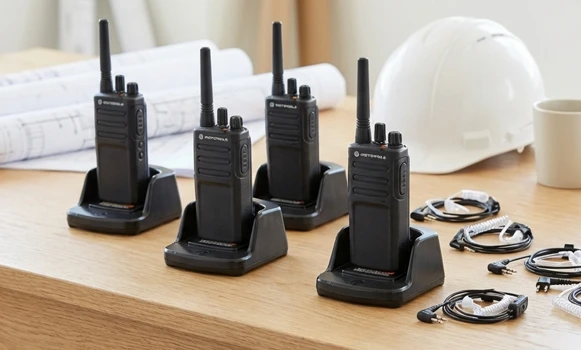
Smaller sets are ideal for mobile teams of two or four, for example, in service, retail or field operations. Mid-sized options such as a set of 4 walkie-talkies or larger sets fit construction zones, event teams or shift groups. Larger 8+ two-way radio sets are suited to environments where many users communicate simultaneously, such as logistics, security services or large operational sites.
In daily operations, these sets bring structure: devices are consistently configured, accessories are compatible and new staff can be onboarded more quickly. These advantages are also widely recognised as key reasons for choosing multi-device radio sets.
Why choose Onedirect?
Onedirect helps you select the right set size, accessory setup and device programming to ensure your radio solution works efficiently in practice. With fast and secure delivery, continuous stock availability, competitive pricing and official accessories, teams can be equipped reliably and expanded with ease.
FAQ – Frequently asked questions
Which radio set size is right?
The right size depends on team size and use case. Small teams often use 2- or 4-unit sets, while larger projects or events may require 6- or 8-unit sets.
Can radios from different sets communicate with each other?
Yes, as long as they are set to the same frequencies and channels, multiple sets can be combined easily.
Why are radios often sold in larger sets?
Larger sets simplify standardised team deployment. All devices are compatible, available at the same time and often pre-programmed together.
Are larger radio sets more cost-effective?
Often yes. The price per device is usually lower compared to buying units individually.
Can radio sets be expanded later?
Yes, many systems can be extended at any time with additional radios or compatible accessories.