
My Cart



Marine Two-Way Radios
Reliable Marine Radio Communication for Sea, Ports and Inland Waterways
Marine two-way radios are an essential part of modern maritime safety. Whether on inland waterways, coastal areas, or in harbour operations, reliable communication ensures that navigation, coordination, and emergency communications run smoothly. Modern marine VHF radios and portable marine VHF radios are specifically designed for onboard use. They withstand saltwater, splashes and harsh weather conditions while delivering clear audio communication over standardised marine radio frequencies.
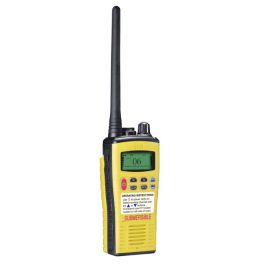
Entel HT649 GMDSS (Package 2) Marine Radio
IN STOCKGMDSS handheld marine radio with backlit LCD display. Pack two - comes with primary and emergency battery and charger- 1-watt MED certified GMDSS radio
- Comes with primary and secondary battery and charger
- Complies with IMO regulations
- IP68 - submersible to 5m for 1 hour
- 19 international simplex channels (INT/US/CAN)
- 7-button keypad and backlit LCD display
- Frequency range: 156 - 163.275MHz
£556.00£533.99 £640.79 Incl. VATRef: ENHT649P2UKCompare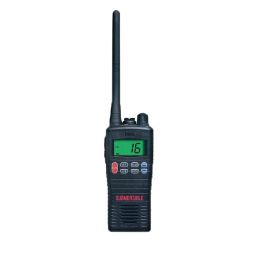
Entel HT644 VHF Marine Two Way Radio
IN STOCKProfessional marine handheld radio that exceeds MIL-STD 810C/D/E/F standards- Operates on VHF marine band
- 58 marine channels, 10 weather channels and 36 programmable private channels
- IP68 - submersible to 5m for 1 hour
- MIL-STD 810C/D/E/F certified
- LCD display
- 7-button keypad
£196.00£188.39 £226.07 Incl. VATRef: ENHT644UKCompare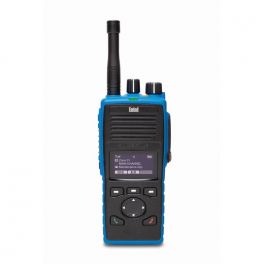
Entel DT944 VHF ATEX
IN STOCKAvailable in either VHF or UHF, display and non-display models, the industrial grade DTEx Series sets the benchmark for next-generation onboard intrinsically safe portables.- All INT, USA & CAN channels
- IP68 Submersible (2m, 4 hours)
- MILSTD construction 810C/D/E/F/G
- High capacity Li-Ion battery
- Exceptionally loud & best clarify audio - in class
- Display channel number & frequency
- Programmable buttons
- Gold plated accessory connector
- Locking accessory connector
- Accessory audio tailoring optimises audio for each accessory
- Easy to read, high contract white on black OLED display
£892.00£713.99 £856.79 Incl. VATRef: ENTDT944VUKCompare
Key features and main functions
Marine radios are specifically designed for maritime environments. Alongside clear voice transmission, the main focus is safety at sea. These devices operate in the internationally standardised marine VHF frequency range, enabling ship-to-ship communication and contact with coast stations or harbour authorities. In emergency situations, the integrated DSC distress function is crucial. With a single press, a digital distress call can be sent, automatically transmitting the vessel’s identity and – on GPS-enabled models – its position.
| Marine VHF frequency range (156–162 MHz) | Standardised frequencies for communication between vessels and coast stations. |
| DSC distress function (Class D) | Digital emergency alert system for rapid contact with rescue services. |
| ATIS support | Identification system for radio communication on inland waterways. |
| IP67 / IP68 waterproof rating | Protection against rain, splashes and temporary immersion. |
| 1–25 W transmission power | Depending on the device type for different communication ranges. |
| GPS receiver (model dependent) | Transmits position data for distress calls or navigation. |
How to choose the right product?
- OKDefine your usage area: inland and coastal waters have different requirements for ATIS and DSC functions.
- OKChoose the device type: portable marine VHF radios are ideal on deck, while fixed radios are permanently installed.
- OKCheck waterproof rating: IP67 or IP68 devices are essential, especially for open boats.
- OKReview emergency features: DSC distress buttons should be easy to access and operate.
- OKEasy to use on board: large buttons, backlit displays, and intuitive menus are key in rough conditions.
- OKPlan installation and power supply: transmission power, antenna position and energy must match your vessel's.
- OKCheck visibility and durability: floating designs and corrosion-resistant materials improve safety at sea.

Applications in professional environments
Commercial shipping and leisure boating widely use marine radios. Fishing vessels, workboats, and harbour operations rely on marine VHF radios for daily coordination between ships and control centers. They are also essential in ports, lockdowns, and water infrastructure projects to ensure safe vessel movement. Charter companies and marine service providers use them to manage fleets and share safety information efficiently.
Why choose Onedirect?
Onedirect offers professional marine two-way radios and marine VHF radios from leading brands such as Icom, designed for demanding maritime conditions. You'll benefit from expert advice, fast delivery, and reliable stock availability. We also support radio configuration and programming to match your specific needs. A dedicated after-sales service ensures your communication system remains reliable over time.
FAQ – Frequently asked questions
What are marine radios used for?
Marine radios enable communication between vessels and between ships and coast stations. They are used for navigation, coordination with ports or locks, and emergency communication at sea.
Which radios are used for marine communication?
Most commonly, marine VHF radios are used. These operate within the 156–162 MHz range and are specifically designed for maritime environments.
Do you need a licence for marine radios?
Yes. In most cases, a licence such as the SRC (Short Range Certificate) or an inland waterways certificate is required. Radios often also need to be registered.
What features are important in modern marine radios?
Key features include DSC distress calling, GPS integration, waterproof housing and backlit displays, all of which improve safety and usability at sea.
Related resources
Radio frequency guide Icon Difference between UHF and VHF radios Icon